
Virginia Divorce Decree Records
Virginia divorce decree records are kept by the Circuit Court Clerk in the county where the divorce was filed, and certified divorce certificates are available through the Virginia Department of Health. This guide covers how to find, request, and get copies of Virginia divorce records from the right office.
Virginia Divorce Records Overview
Three Types of Virginia Divorce Decree Records
Virginia has three distinct types of divorce records, and each one comes from a different office. Knowing which type you need will save you time. The three types are: the divorce certificate, the final divorce decree, and the divorce case file. Each serves a different purpose, and each is held by a different agency.
A divorce certificate is the shortest form of proof that a divorce was granted. It shows the names of both parties, the date, and where the divorce was finalized. The Virginia Department of Health Office of Vital Records issues divorce certificates and holds records going back to 1918. Most people use a certificate when they just need to prove their divorced status, such as when applying for a marriage license or updating a government ID.
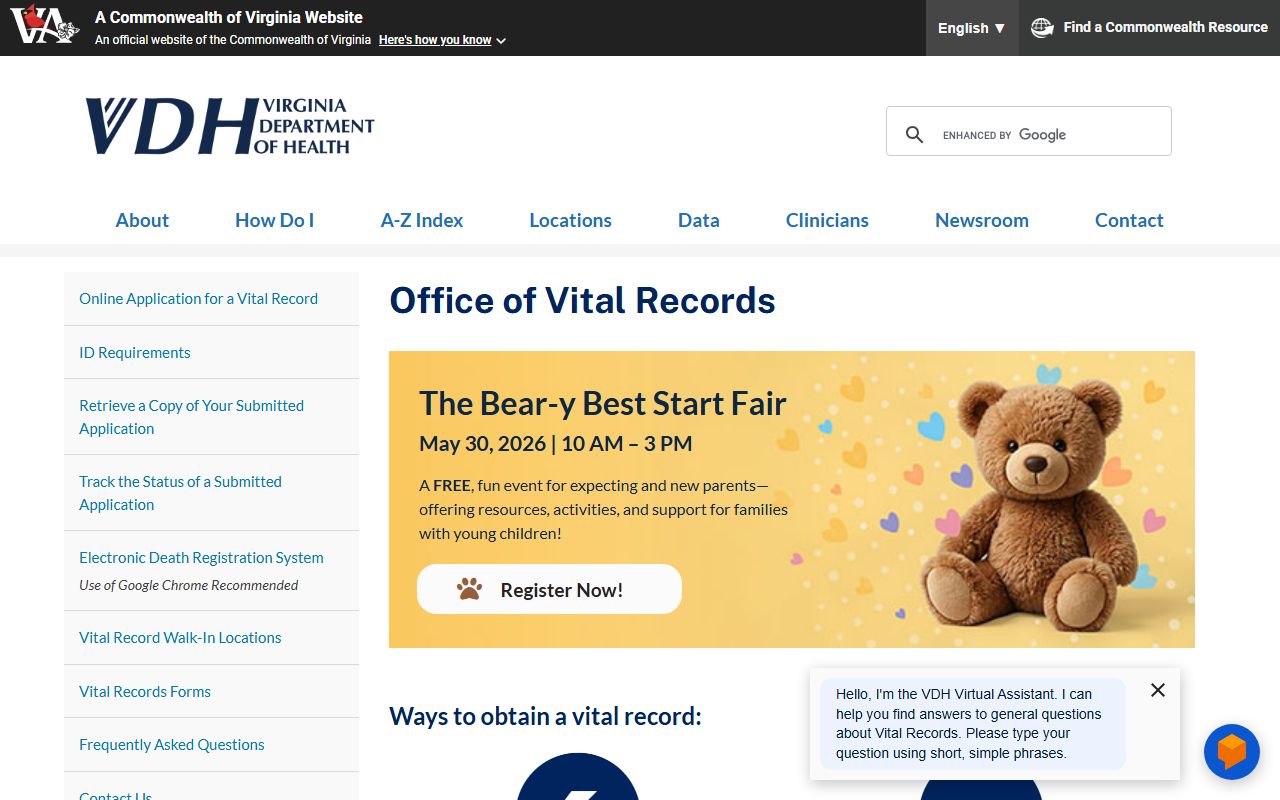
The VDH Vital Records office handles all requests for divorce certificates. They process walk-in, mail-in, and drop-off applications for certified copies.
A final divorce decree is the full court order that ends the marriage. It is much more detailed than a certificate. The decree spells out every term of the settlement: who gets which property, any spousal support amounts, child custody arrangements, a visitation schedule, and child support if there are minor children. It may also include a name restoration order if one party asked to go back to a prior name under Virginia Code § 20-121.4. The Clerk of the Circuit Court where the divorce was granted keeps and issues final divorce decrees.
Divorce case files are the third type. These are the complete set of all documents filed during the divorce proceeding. That includes the original complaint, summons, motions, pleadings, financial affidavits, and any other papers that went into the record. If you need to review the full history of a case, you request the case file from the Circuit Court Clerk in the county where it was heard.
Where to Find Virginia Divorce Records
There are two main places to look for Virginia divorce records. The first is the Circuit Court Clerk's office in the county or city where the divorce was filed. The second is the Virginia Department of Health. Which office you contact depends on what type of record you need.
Under Virginia Code § 17.1-208, clerks of circuit courts are required to keep their records open for inspection. Nonconfidential court records are available to any person who asks, subject to the confidentiality rules that apply specifically to divorce records. The clerk's office is your first stop for final decrees and full case files.
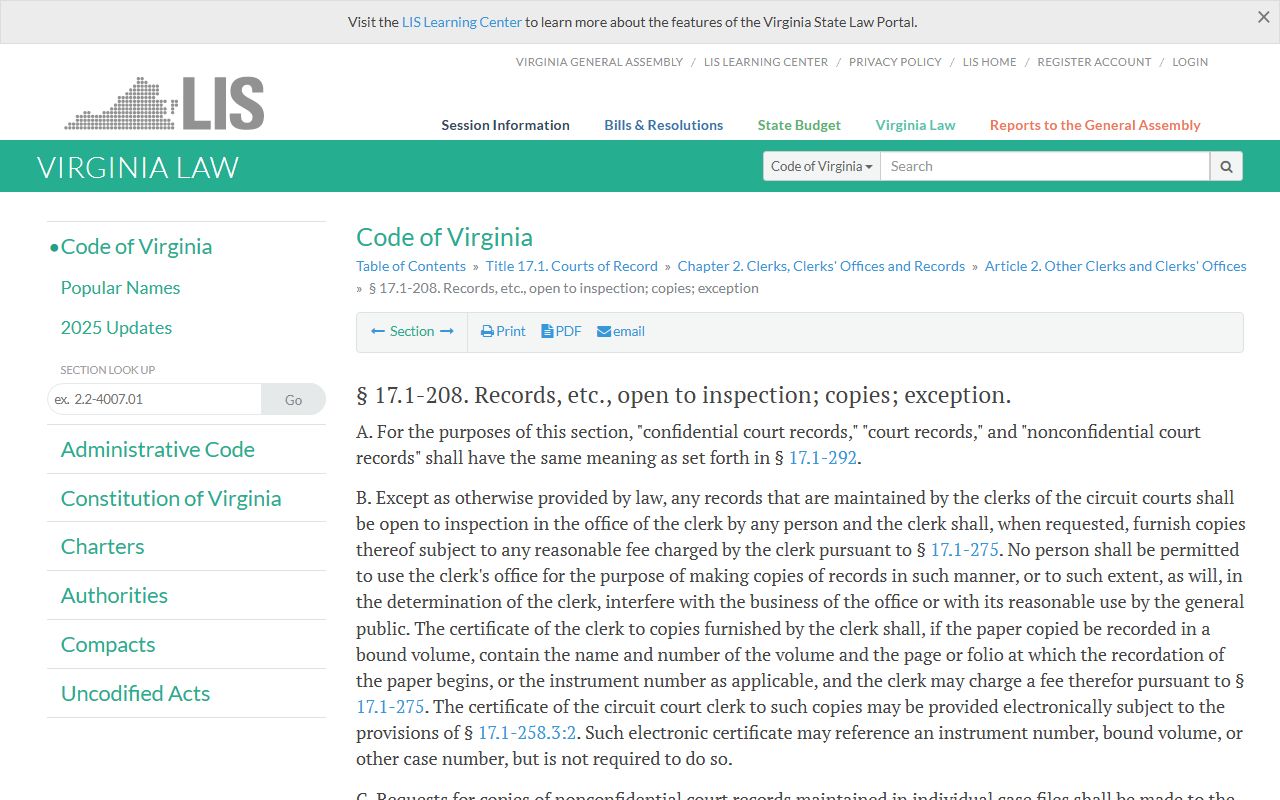
Court records that are open to the public remain accessible on request. The clerk must provide copies within a reasonable time, and no later than 30 days from a complete request.
For divorce certificates, the Virginia Department of Health is the right office. The VDH Office of Vital Records is at 8701 Park Central Drive, Suite 100, Richmond, VA 23227. You can reach their Customer Care Center by phone at (804) 662-6200, Monday through Friday from 8:00 AM to 4:30 PM. Mail-in requests go to P.O. Box 1000, Richmond, Virginia 23218-1000. Walk-in hours are Monday through Friday, 7:00 AM to 4:00 PM.
Some local health departments also issue certified divorce certificates for events that occurred in Virginia. The Fairfax County Office of Vital Records, for example, issues certificates for divorces going back to 1918. This is a useful option if you live far from Richmond and want to skip the drive to the state office. Records are provided as a walk-in service only and cannot be searched over the phone.
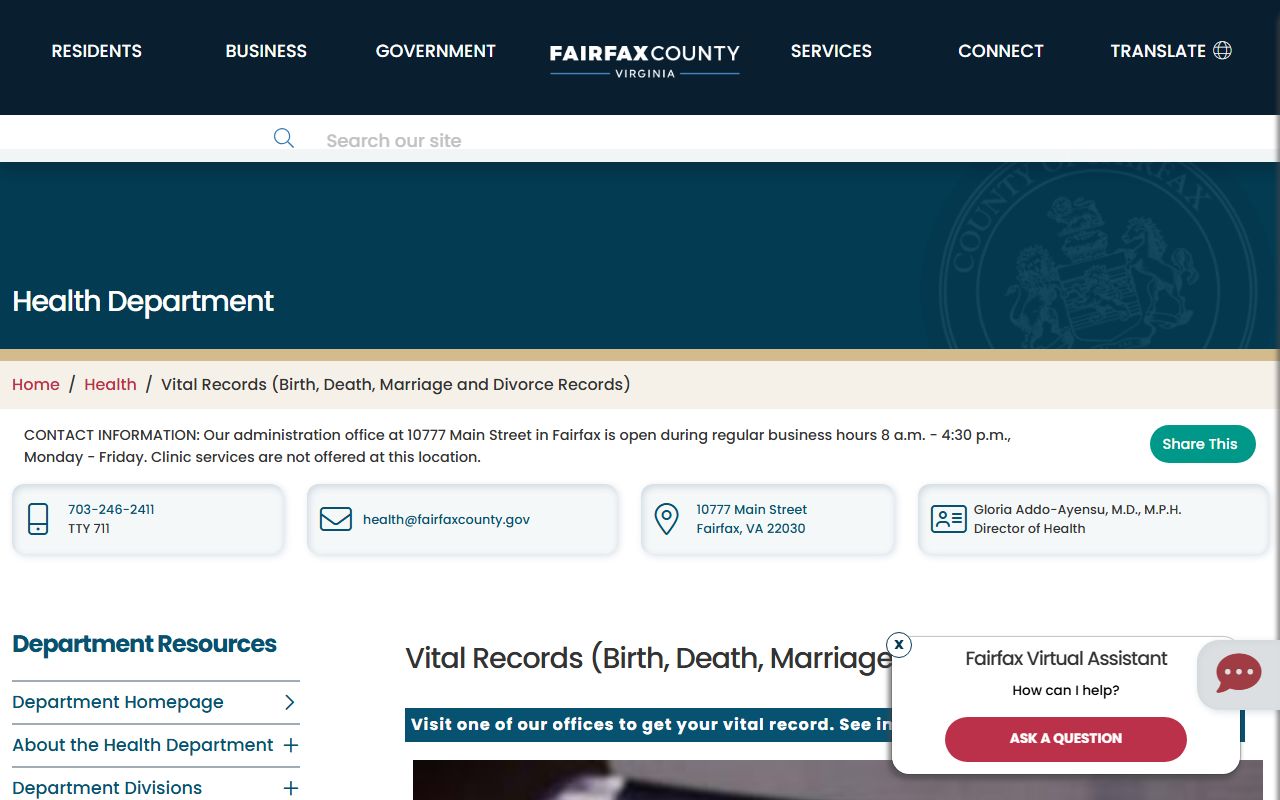
Fairfax County's vital records office provides the same certified divorce certificates as the state office in Richmond.
Who Can Access Virginia Divorce Decree Records
Virginia law restricts access to divorce records for 25 years after the date of the divorce. Under Virginia Code § 32.1-271, divorce records are not public records during this period. After 25 years, the records become public information and anyone can request them.
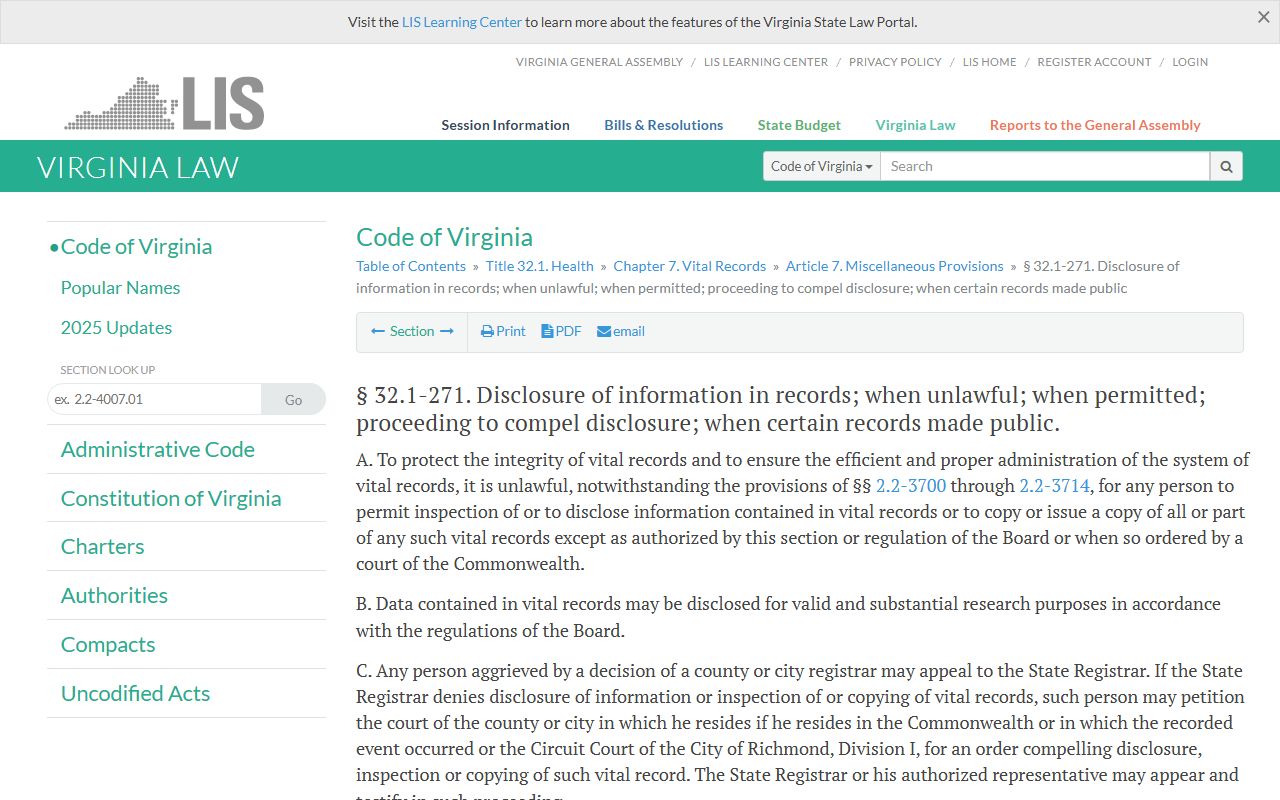
Before the 25-year mark, only a limited group of people can get copies. Those who qualify include the parties named in the divorce record and their immediate family members. The law defines immediate family as parents, a spouse, children, siblings, and grandparents. Extended family members such as aunts, uncles, cousins, and in-laws do not qualify. Anyone in the eligible group must present a valid government-issued ID to prove their identity and relationship to the person named in the record.
Access Restriction: Virginia Code § 32.1-271 makes it unlawful for any office to issue a divorce record to an unauthorized person before the 25-year public access period begins. Attorneys may request records on behalf of clients they represent.
The Virginia Freedom of Information Act, found at Virginia Code § 2.2-3700, generally promotes open government and public access to records. However, vital records including divorce certificates are specifically carved out from general FOIA access during the restricted period. The FOIA policy sets a presumption of openness for government records, but the exemption for vital records must be honored until the 25-year window closes.
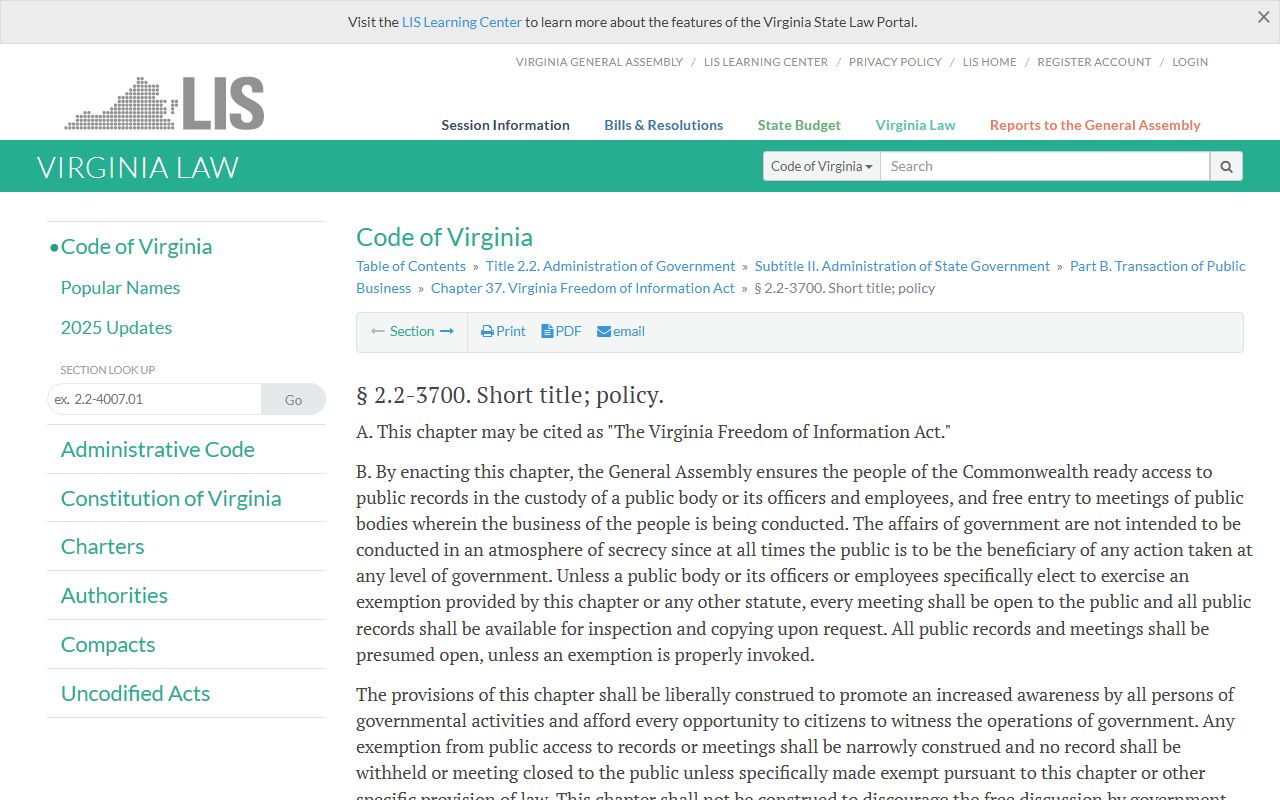
Once the 25-year window passes, the FOIA exemption no longer applies and the records become fully public.
Divorce records can also be sealed permanently under Virginia Code § 20-124. A party to the divorce can file a motion asking the court to seal the record from public view. If the court grants it, the record stays closed even after the standard 25-year period ends. Sealed records remain accessible only to the named parties, their attorneys, and anyone else the judge specifically permits. Courts may seal records to protect children, shield sensitive financial data, or prevent harm to a party.
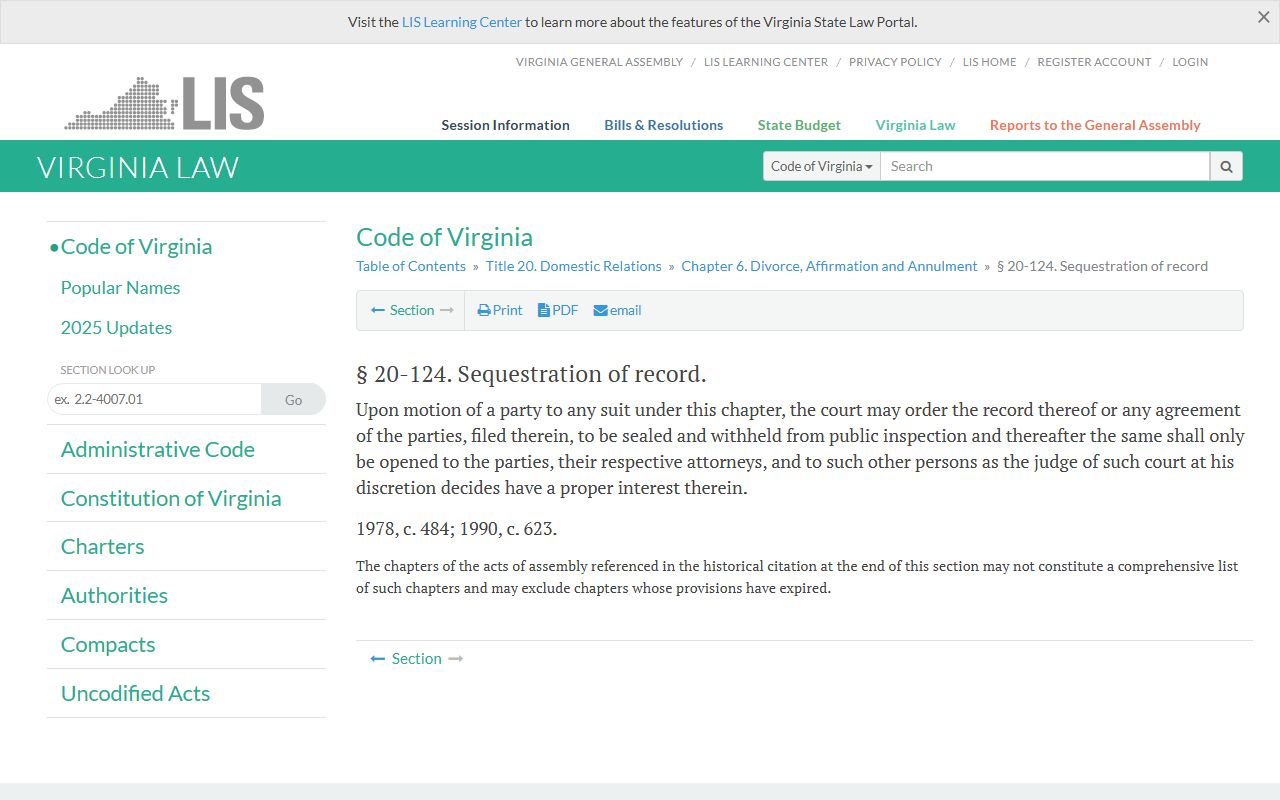
Sealing a divorce record is not automatic. A party must file the motion during or after the proceeding. The judge decides based on the specific facts of the case.
How to Request Virginia Divorce Decrees
The steps to get a divorce record depend on which type you need. For a divorce certificate, you go to the VDH. For a final divorce decree or case file, you go to the Circuit Court Clerk in the county where the case was filed. Both offices accept in-person and mail-in requests.
To get a divorce certificate from the VDH Office of Vital Records, start by filling out the application form. You will need the full names of both parties, the date of the divorce, and the county where it was granted. Bring a legible photocopy of a valid government-issued ID. You can drop off the completed application at the front desk at 8701 Park Central Drive in Richmond, submit it by mail to P.O. Box 1000, Richmond, VA 23218-1000, or walk in during business hours. Under Virginia Code § 32.1-272, certified copies issued by the State Registrar carry the same legal weight as the original record and can be used for court proceedings, name changes, and proving marital status.
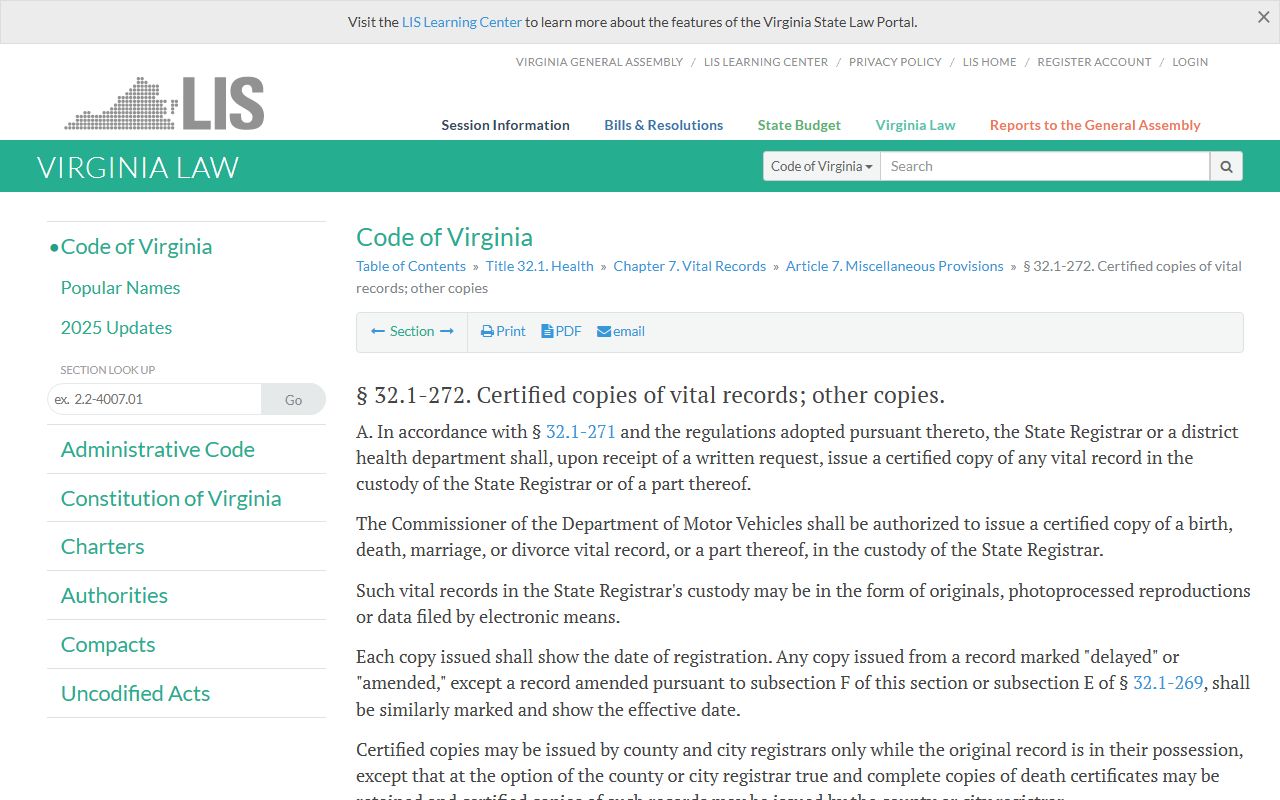
Certified copies are legal equivalents of the original record. Any agency or court that asks for proof of divorce will accept a certified copy.
To request a final divorce decree from a Circuit Court Clerk, contact the clerk in the county where the divorce was finalized. For records held by the Fairfax County Circuit Court, you send a written letter to the Clerk of Circuit Court that includes the case number, the year of the divorce, and both parties' full names. Enclose a self-addressed stamped envelope and the appropriate fee. You can also go in person to the courthouse.
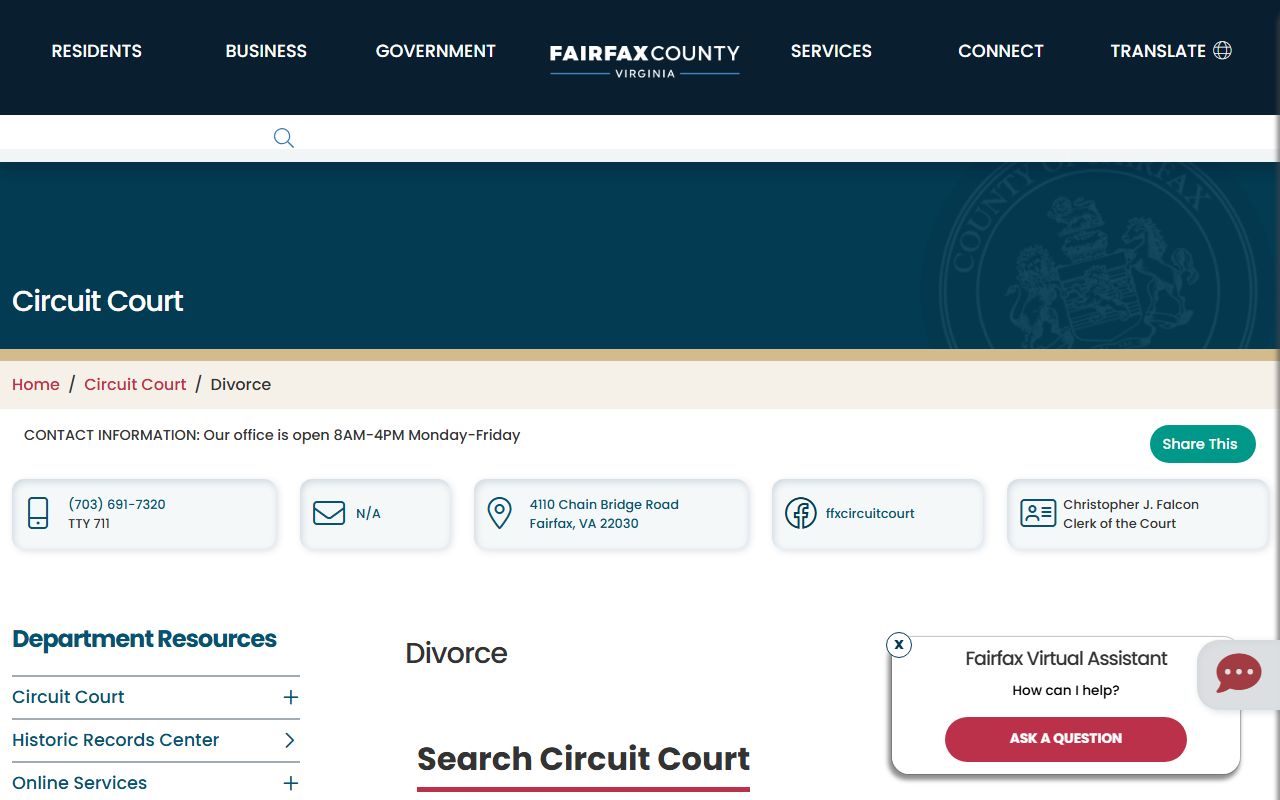
Fairfax County's Circuit Court provides guidance on both the divorce filing process and how to obtain certified copies of final decrees once a case is closed. Other county clerks follow similar procedures. Contact the specific office if you are unsure of the steps in your county.
Mail-in requests to VDH typically take two to four weeks to process. Standard processing is about two weeks. Express delivery with next-day processing is also available. Drop-off requests must be submitted before 2:00 PM to count as received that day. Requests dropped off after 2:00 PM are treated as received the next business day.
Under Virginia Code § 32.1-268, every Circuit Court Clerk must report each final divorce decree to the State Registrar by the 10th of the month after it was granted. This is how VDH builds and maintains its statewide divorce record database. The report includes the parties' ages and the number of minor children involved in the case.
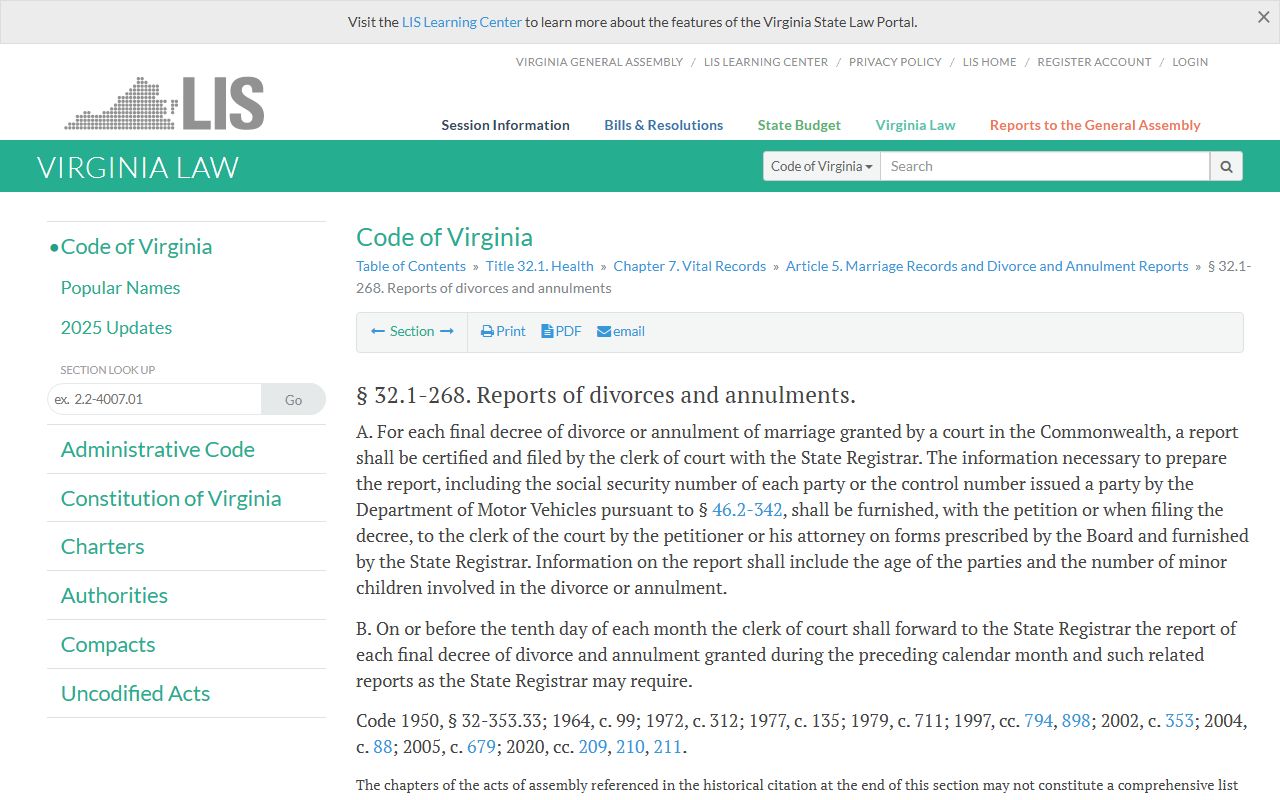
Every final decree issued in Virginia is reported to the state. This creates the statewide divorce record database that VDH uses to issue certificates.
Divorce Record Fees in Virginia
Fee schedules differ depending on which record you need and which office issues it. The costs are set by state law and do not vary much from county to county for the basic fees, though some courts may have small differences.
The VDH charges $12 for each certified copy of a divorce certificate, as established under Virginia Code § 32.1-273. This fee applies whether you request in person, by mail, or by drop-off. Payment must be a signed check or money order made payable to the State Health Department. You can also pay by card or mobile pay for walk-in and drop-off requests. The fee covers one certified copy. Each additional copy costs another $12.
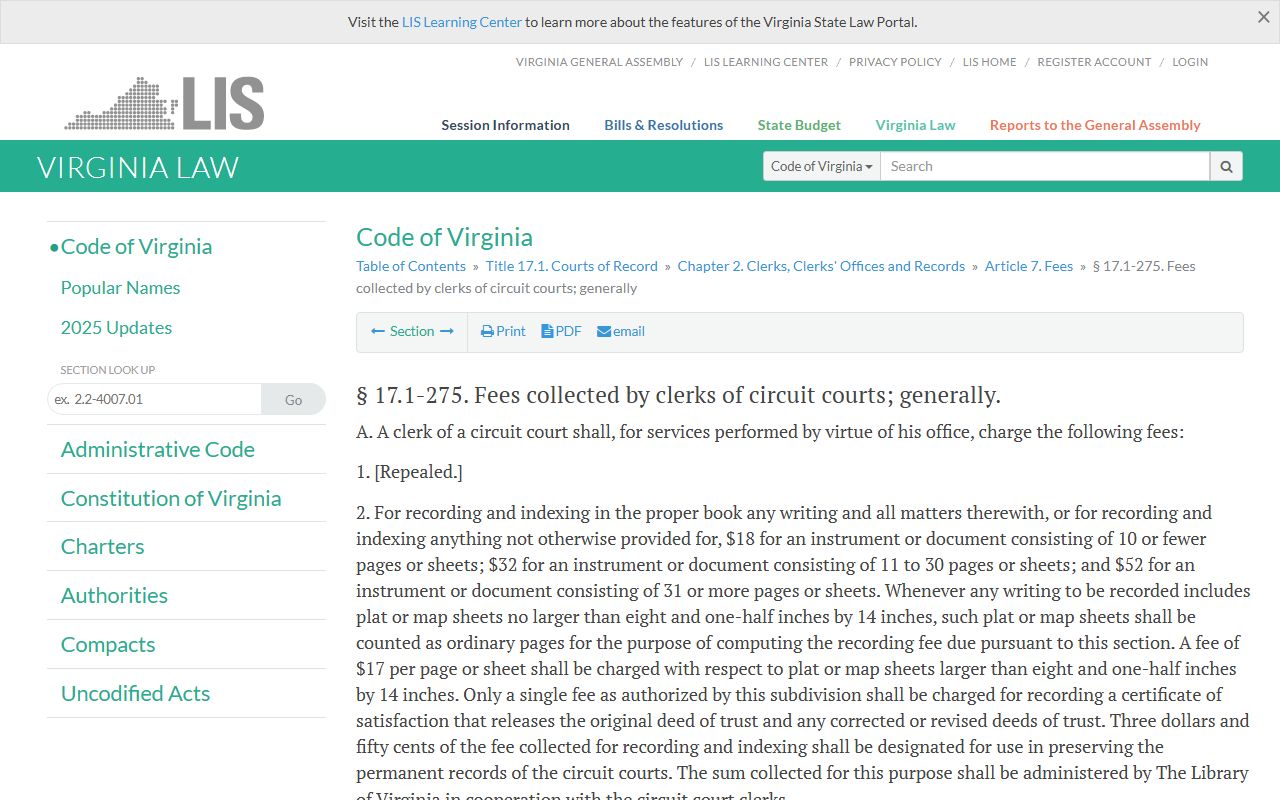
Virginia Code § 17.1-275 sets the clerk fee schedule for all circuit courts. The law covers filing fees, copy fees, and the cost of certified decrees.
For final divorce decrees from the Circuit Court Clerk, the rules under Virginia Code § 17.1-275 are clear. The first certified copy of the final decree is free. This free copy goes directly to the party who received the order. Additional copies cost $0.50 per page. The $60 filing fee that a petitioner pays at the start of the case already includes the cost of that one free certified copy. All fees to the Circuit Court Clerk must be paid by cash, cashier's check, or money order. Personal checks are generally not accepted.
Note: The first certified copy of your final divorce decree is free under Virginia law; additional copies cost $0.50 per page from the Circuit Court Clerk.
Virginia Divorce Laws and Filing Requirements
Virginia law sets the rules for who can file for divorce, what grounds are valid, and how long the process takes. These rules shape every divorce decree that gets issued across the state's 95 counties and independent cities.
Residency is the first requirement. Under Virginia Code § 20-97, at least one spouse must have lived in Virginia as a genuine bona fide resident for at least six months before filing. The law includes a special provision for members of the U.S. Armed Forces. If a service member has been stationed or lived in Virginia for at least six months before the filing date, they are presumed to meet the residency requirement. This covers service members stationed at bases within the state as well as those on ships with home ports in Virginia.
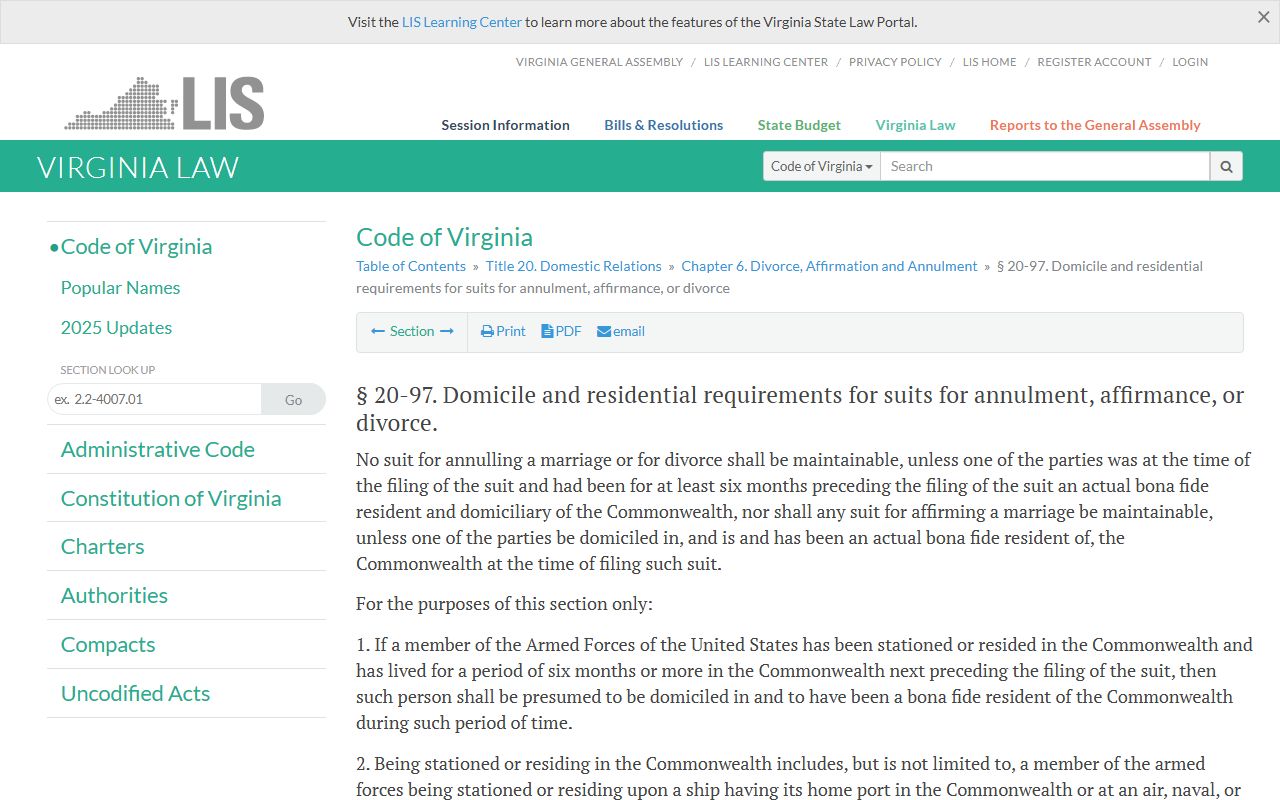
The six-month residency rule applies to all divorce filings. If a couple separates, each spouse may establish a separate domicile even if the separation itself gave grounds for the divorce.
Jurisdiction for all divorce cases sits with the Circuit Court. Under Virginia Code § 20-96, only a circuit court can grant a final divorce decree in Virginia. General district courts do not have jurisdiction. Once the Circuit Court issues the decree, the Circuit Court Clerk holds the official record.
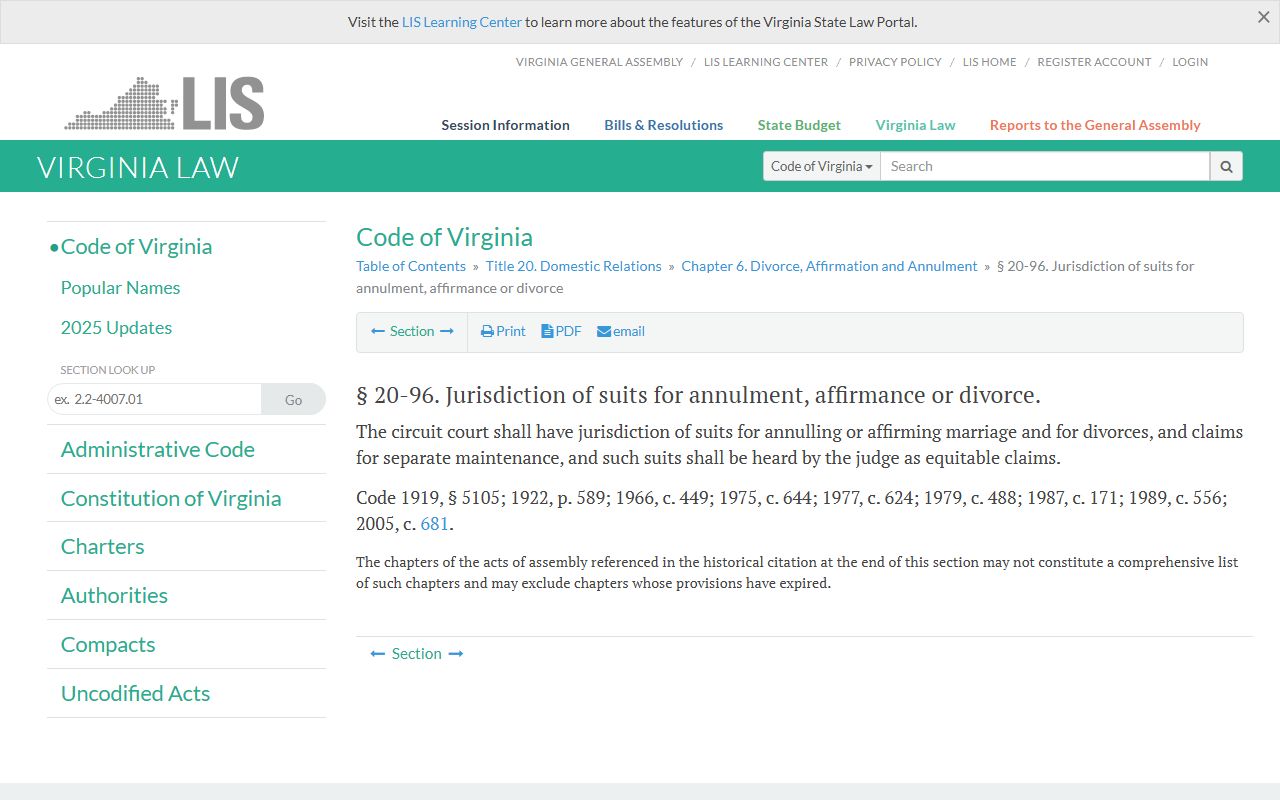
All divorce suits must be filed in a circuit court. General district courts do not handle divorce cases.
The grounds for divorce in Virginia are set out at Virginia Code § 20-91. There are four recognized grounds: adultery (or sodomy or buggery committed outside the marriage), conviction of a felony with more than one year of confinement, cruelty or willful desertion (after one year from the act), and separation without cohabitation. For the no-fault separation ground, couples must live apart for at least one year. If there are no minor children and both parties have signed a written separation agreement, the waiting period drops to six months. The statute also requires that every final divorce decree include each party's Social Security number or DMV-issued control number.
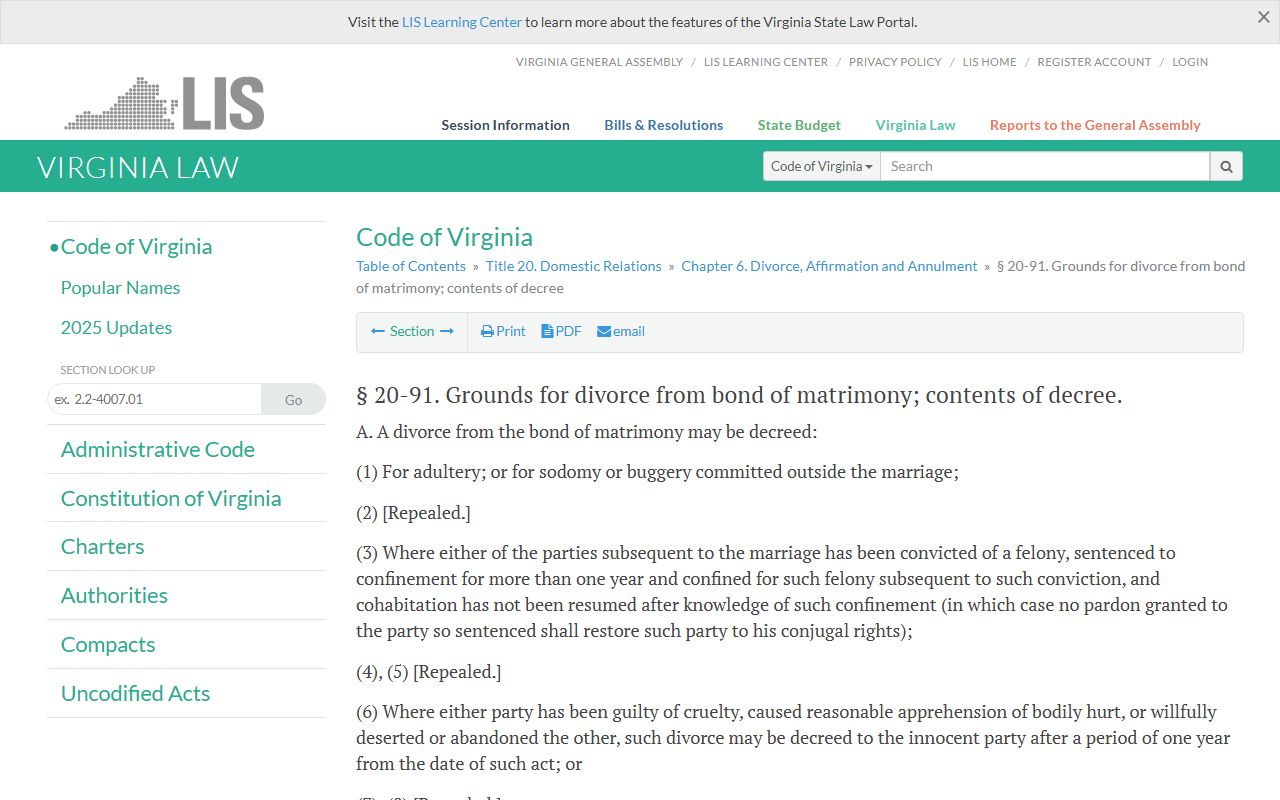
Virginia Code § 20-91 governs the grounds for divorce. There are four valid grounds under current law. Five others were repealed over time.
Filing a divorce suit is governed by Virginia Code § 20-99. The filing party submits a divorce complaint to the Circuit Court Civil Intake Division along with required state forms, including the VS-4 statistical form and the domestic case coversheet. These documents become part of the official court file. The case then moves to the domestic track of the court's docket.
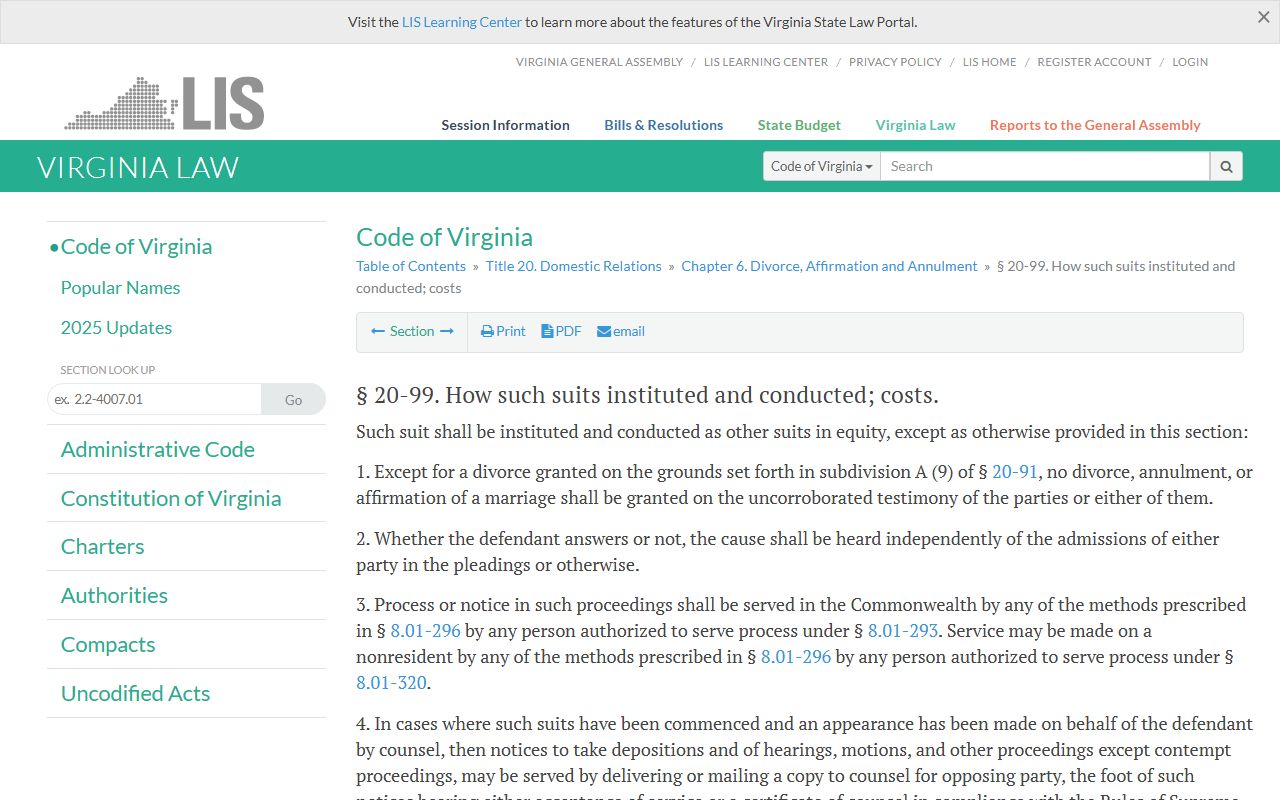
The divorce complaint is the first document in any case file. After it is filed, the clerk assigns the case to the domestic track and the other spouse must be served or sign a waiver.
An uncontested divorce typically takes two to three months from filing to final decree. Both parties agree on all terms without needing a trial. Contested cases, where the parties disagree on property division, custody, or support, can take up to 18 months. Property division follows equitable distribution rules under Virginia Code § 20-107.3. If support amounts need to change after the decree is issued, either party can seek a modification under Virginia Code § 20-109.
Browse Virginia Divorce Records by Location
Every Virginia county has a Circuit Court Clerk who keeps divorce decree records. Use the links below to find information for your county or city.
Virginia Counties
Divorce decree records are filed with the Circuit Court Clerk in each county. The counties below are among the most populous in Virginia.
Major Virginia Cities
Independent cities in Virginia have their own Circuit Courts. These cities are among the largest in the state and each maintains its own divorce decree records.